
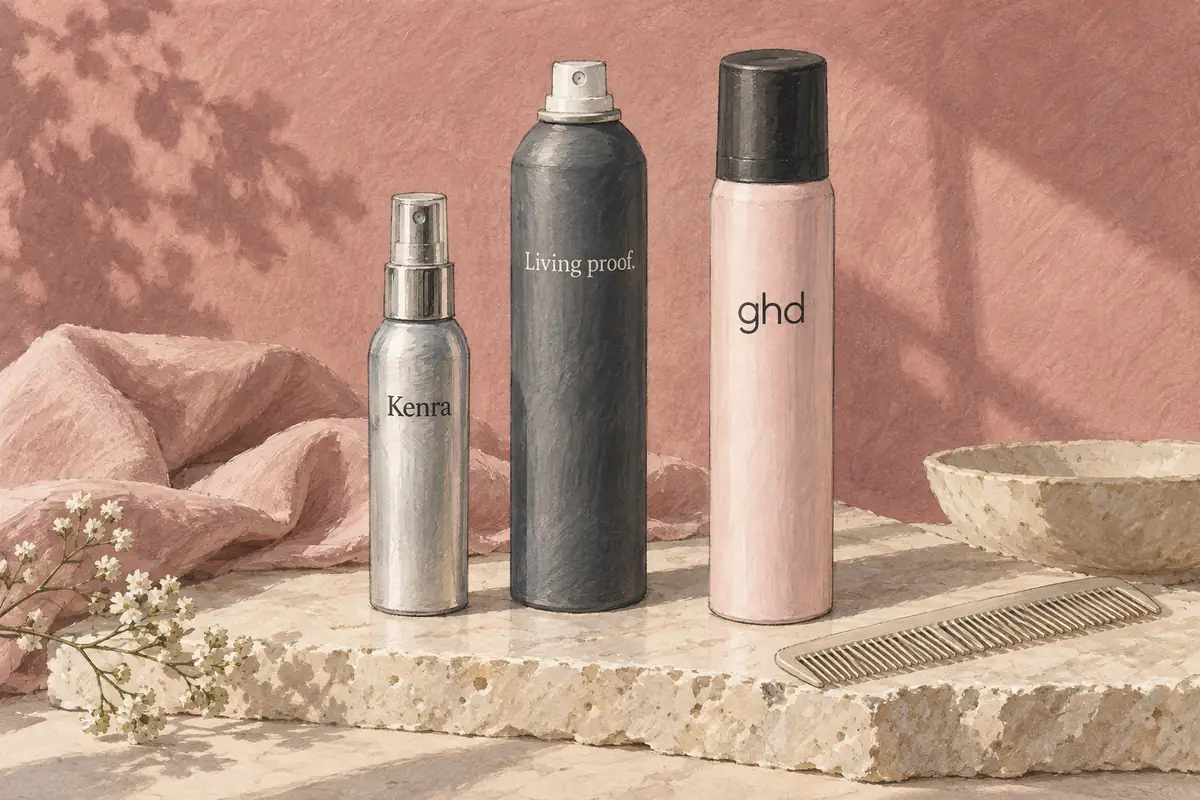
Fine hair makes a heavy styling product hard to hide. A little too much can leave the ends in strings and the roots flat before you have even finished drying.
The best heat protectant for fine hair is one that fits both the tool and the finish you want. A spray for damp hair before blow drying is not always the same as a dry-hair mist for a quick touch-up. Start there, then look at weight, scent, and price.
These three picks cover those different jobs. They are recommendations based on their formulas, stated uses, and buyer feedback, not a claim that one spray will feel weightless on every head of hair.
Best heat protectants for fine hair: three clear choices
| Product | Best reason to choose it |
|---|---|
| Kenra Platinum Blow-Dry Mist | A light mist before blow drying |
| Living Proof Perfect hair Day Heat Styling Spray | Damp or dry hair, including touch-ups |
| ghd Bodyguard for Fine & Thin Hair | A formula made for fine and thin strands |
Kenra is our first pick for a regular blow-dry. Living Proof is the more flexible choice if you also heat style dry hair. ghd is worth a look if you want a product made for your hair type, though its small set of visible US reviews is a reason to check fit before buying.
1. Kenra Platinum Blow-Dry Mist: our pick before blow drying
Kenra Platinum Blow-Dry Mist costs $28 for 3.4 fl oz on the brand's US site. Kenra describes it as an ultra-lightweight formula that helps detangle, smooth, and soften hair while providing thermal protection.
The useful distinction is the word Mist. Kenra sells a separate Blow-Dry Spray. The brand points to the Mist for hair that is easily weighed down, so check the product name when you buy.
Apply evenly to damp hair, then blow dry. Kenra also claims it can cut drying time by 50 percent. That is the brand's claim, not a time saving we can promise for your length or dryer.
Why it makes the list: the product is aimed at the light feel many fine-haired readers want, and it fits a straightforward wash-day routine. You do not need a rich cream simply because the ends need smoothing.
What could put you off: fragrance is listed among its ingredients. A fine mist does not mean no scent, and no styling product is weightless at any dose. Start with the label's directions and watch the finish rather than spraying until your hair feels slick.
Kenra is most appealing if blow drying is your main heat step. If you want one heat protectant for a dry-hair flat iron session as well, the next option has clearer guidance for that use.
2. Living Proof Perfect hair Day Heat Styling Spray: for dry-hair touch-ups
Living Proof Perfect hair Day Heat Styling Spray is made for damp or dry hair. The 5.5 oz can is listed at $34, and the brand states heat protection up to 450°F. It says the formula works best on fine to medium hair.
That makes this the most flexible pick here for someone who blow-dries after washing and uses hot tools again between washes. The directions call for a light, sweeping application from six to ten inches away, working through sections.
Why it makes the list: dry application is an explicit part of the product's intended use. You do not have to guess whether a wet-hair prep spray also suits tomorrow's curling iron.
What could put you off: it is a scented aerosol, and the official listing showed an out-of-stock notice during this review. Check availability before you plan your routine around it. Its purpose is smoothness and heat protection, not strong hold.
Buyer feedback on the same page is mixed in useful ways. One buyer praised light feel on fine hair; another disliked the scent and a film-like feel. That is a reminder to treat fragrance and finish as personal preferences, not small details.
If you need your curls to stay put, do not assume a heat protectant will also work as hairspray. The two jobs are different.
3. ghd Bodyguard for Fine & Thin Hair: a targeted formula
ghd Bodyguard Heat Protect Spray for Fine & Thin Hair is listed at $28 on ghd's US site. The brand claims heat protection up to 446°F and a fuller feel through a light coating on each strand.
Why it makes the list: it is designed around fine and thin hair rather than a general formula presented as suitable for everyone. If a rich leave-in conditioner makes your hair droop, a dedicated spray may be a better fit for your styling step.
What could put you off: product claims are not the same as consistent buyer results. The visible US listing has a low review rating, so read the individual feedback and return terms instead of treating the words “fine hair” as a guarantee. We place it third for that reason.
There are several Bodyguard versions. Check that your bottle is the Fine & Thin Hair formula. A similar-looking product from the same range may be intended for a different hair type.
All prices above were checked on September 28, 2026. Retailer offers and stock can change.
What fine hair needs from a heat protectant
Fine hair describes the width of each strand. Thin hair describes how much hair you have. You can have lots of fine hair, or a smaller amount of coarse hair. That is why two people who both say their hair is “thin” can need different products.
For a fine strand, a light and even layer is often easier to manage than a thick cream. But the right amount still depends on how much hair you have. A short bob and long hair will not need the same dose.
Think about the finish too. If you want volume, a very sleek coating may feel like the wrong result even when it controls frizz. If you want shiny, straight hair, the same finish may be exactly right.
A heat protectant is one part of the styling process. Lower heat, fewer repeated passes, and a gentle brush routine still matter. A high protection temperature on a label is not a recommended tool setting.
Damp hair or dry hair? Match the directions
Before blow drying, use a product labeled for wet or damp hair. Towel dry first if the directions call for it, then work in sections. Spray the underside as well as the top so coverage is not limited to what you can see.
Before a flat iron or curling iron, make sure the product is intended for that use. Living Proof's stated damp-or-dry application is one reason it earns a place here. Follow the bottle and tool directions about drying before direct heat.
Do not assume that “heat activated” means a formula can be used any way you choose. Nor does a fine mist make a wet-hair product a dry-hair finishing spray. The directions are more useful than the marketing words on the front.
If you are also choosing a dryer, our Shark FlexStyle vs Dyson Airwrap comparison explains the features that may change your routine. A new dryer is not a reason to stop using careful technique.
How to avoid a heavy or sticky finish
Work with a clean starting point. If your shampoo day includes a rich conditioner, leave-in conditioner, hair oil, smoothing cream, and heat protectant, it can be hard to tell which layer is weighing your hair down.
Keep the care you need, but avoid adding products by habit. Start with the recommended amount of heat protectant, spread it evenly, and judge the dried result. If the ends look stringy, adding more spray is unlikely to give them lift.
Aim for even coverage rather than one wet patch. Keep the nozzle at the stated distance. Section dense hair instead of trying to reach the lower layers with a long blast from above.
A fine-hair discussion about Kenra's drying products includes a buyer who did not notice the promised time saving. That does not tell us whether a formula will suit you, but it helps set a fair expectation: the label's biggest number may not be the benefit you notice.
Colored hair, dry ends, and damaged hair
Choose heat protection for the styling you do, then keep care and repair as separate questions. A product that shields hair during styling is not proof that it can fix existing damage or seal split ends for good.
If coloring has left your hair hard to manage, a richer care step may still be useful even if your strands are fine. The aim is not to remove all moisture from your routine. It is to avoid adding weight that serves no purpose.
Our K18 vs Olaplex guide compares two repair routines and explains what each asks you to do. Neither replaces the need to use heat with care.
Do not rely on a few drops of plain hair oil as proof of heat protection. Look for clear use directions and a stated heat-protection function. An ingredient can add slip or shine without making the whole product a tested heat protectant.
When frizz control is the bigger issue
A smooth finish and a light feel can pull in different directions. The spray that keeps the surface sleek may not give the root lift you want. Decide which goal matters most that day.
For a full humidity-focused blow-dry, see our Color Wow Dream Coat review. It explains why that product needs a more specific routine. It is a separate choice from a light, everyday heat-prep mist.
No product can promise frizz-free hair through every kind of weather or every styling habit. Look for a result you like in your normal routine, not a result that requires a new collection of products to maintain.
Read the heat protectant label in this order
A long list of key ingredients can sound more helpful than it is. Before comparing oils, silicones, or plant extracts, check three simple things: when to apply the heat protectant, which styling tools it suits, and how much to use. Those details decide whether it fits your day.
A heat protectant spray that adds shine is not always a good match for someone who wants a soft, fluffy finish. A product described as moisturizing may still leave fine hair greasy if you use too much. The whole formula matters more than one ingredient on the front.
Treat temperature claims with care too. Two labels with close numbers do not prove which heat protectant prevents more heat damage. They may come from different tests. Choose a setting suited to your hair and tool, rather than turning up the heat to match the bottle.
A simple first-wash check
Use the heat protectant with your normal shampoo and conditioner. Keep other styling products to the steps you need. This gives you a clearer idea of what the new spray adds.
After drying, check the roots and ends separately. Does the hair feel soft? Are there greasy patches, sticky residue, or a stiff feel? Does brushing feel easy, or are you pulling through tangles? A smooth finish is only useful if you like how it feels too.
If one patch feels coated, work on even distribution next time. Too much product in one spot can make a lightweight mist feel heavy. If the whole head feels wrong despite careful use, a different heat protectant may be a better choice than adding more products to correct it.
You cannot assess heat damage from one good hair day. Shine, softness, and less frizz are useful things to notice, but they do not prove that every strand is protected. Keep following the label even when the hair looks healthy.
Which one should you buy?
Choose Kenra Platinum Blow-Dry Mist if you want a light prep step before blow drying. It is the clearest starting point here for that job.
Choose Living Proof Heat Styling Spray if dry-hair touch-ups matter and you like a scented aerosol. Check stock, and remember that it is not a hold product.
Consider ghd Bodyguard for Fine & Thin Hair if you want a hair-type-specific spray, but weigh the available buyer feedback before committing.
You only need one that suits the way you style. A shelf full of heat protectants is not a better plan than a light, even application of the right one.